

Introduction
Curious about the history and transformation of Bulldogs?
These powerful yet affectionate dogs have one of the most fascinating stories in canine history. From the bull-baiting arenas of medieval England to their transformation into gentle, loyal companions, Bulldogs reflect both human history and evolution in compassion.
Let’s explore where the Bulldog came from, how it changed, and why it remains one of the world’s most recognizable dogs.
The Early Origins of the Bulldog
The Bulldog’s story begins in 13th-century England, where ancestors of the modern breed were developed for a brutal sport called bull-baiting.
These early Bulldogs were larger, more muscular, and bred for strength and tenacity. Their purpose was to grip and control bulls — a display of courage and endurance prized at the time.
While these dogs were fierce in the ring, they were also loyal to their handlers — a temperament that would later make them beloved companions.
The End of Bull-Baiting and the Bulldog’s Transformation
In 1835, bull-baiting was officially banned in England under the Cruelty to Animals Act. This marked a turning point for the Bulldog breed. Without the demand for fighting dogs, breeders began focusing on temperament and appearance rather than aggression.
Selective breeding transformed the Bulldog into a smaller, calmer, and friendlier version of its ancestors.
This new Bulldog became a symbol of resilience and British pride — embodying courage without cruelty.
For insight into modern Bulldog care, see Important English Bulldog Care Tips.
The Victorian Era: Refining the English Bulldog
During the Victorian era, the Bulldog gained popularity as a show and companion dog. Breeders emphasized the traits we recognize today:
-
Short muzzle and broad face
-
Compact, muscular body
-
Loyal and affectionate temperament
In 1873, the Bulldog was officially recognized by The Kennel Club in England, cementing its place as a cherished national breed.
Fun fact: Winston Churchill was often compared to the Bulldog for his steadfastness during World War II — a nickname that reinforced the Bulldog’s image as a symbol of determination.
The Bulldog Crosses the Atlantic
By the late 1800s, Bulldogs had arrived in the United States, where they quickly captured hearts as loyal, low-maintenance pets.
American breeders continued refining the English Bulldog’s physical traits, and by the early 20th century, the breed had become a family favorite — especially known for its patience with children.
Today, the English Bulldog ranks among the most popular dog breeds in both the U.S. and the U.K.
For comparisons between Bulldog types, check Various Bulldog Breeds and What Sets the English Apart from the Rest.
Physical and Temperamental Evolution
Modern English Bulldogs are very different from their early ancestors.
Through centuries of selective breeding, their appearance and personality have evolved into something truly unique:
| Trait | Early Bulldogs | Modern English Bulldogs |
|---|---|---|
| Purpose | Bull-baiting and work | Companionship |
| Size | Larger and leaner | Shorter, stockier |
| Temperament | Fierce and driven | Gentle and affectionate |
| Snout | Longer muzzle | Distinctly short |
| Energy level | High endurance | Low to moderate |
While the early Bulldog was bred for physical toughness, today’s English Bulldog is known for emotional toughness — steady, loyal, and deeply loving.
The Symbolism of the English Bulldog
Over time, the Bulldog has come to represent courage, loyalty, and resilience. It’s the mascot of numerous sports teams, military units, and even entire nations.
In pop culture, Bulldogs appear in films, advertisements, and cartoons as icons of stubborn charm and heartwarming devotion.
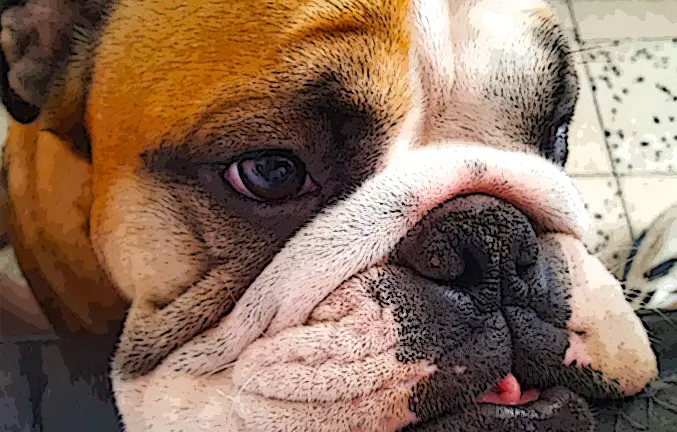
Their signature look — wrinkled face, underbite, and soulful eyes — makes them instantly recognizable and universally adored.
Health and Breeding Awareness
Modern breeding has created a lovable but sensitive dog. Because of their short snouts and compact bodies, Bulldogs can face breathing, skin, and joint challenges.
Ethical breeders now focus on improving health by encouraging responsible pairings and genetic diversity — ensuring that this historical breed continues to thrive.
For care and prevention advice, visit Keep Your English Bulldog Fit and Healthy.
Why the English Bulldog Endures
What makes the English Bulldog’s story remarkable is its transformation — from fighter to friend, from symbol of strength to symbol of loyalty.
Despite changing times, Bulldogs remain true to their essence: brave, patient, and endlessly loving.
They remind us that strength doesn’t always roar — sometimes, it snores softly beside you on the couch.
FAQ
Q: Where did the English Bulldog originate?
A: The English Bulldog originated in England during the 1200s and was initially bred for bull-baiting before evolving into a companion breed.
Q: When was bull-baiting banned in England?
A: In 1835, under the Cruelty to Animals Act, which led to the Bulldog’s transformation into a gentler dog.
Q: How did the English Bulldog get its name?
A: The name “Bulldog” came from their original role in bull-baiting — they were strong, brave, and used to control bulls.
Q: Are English Bulldogs related to other Bulldog breeds?
A: Yes, they share ancestry with the French Bulldog, American Bulldog, and Olde English Bulldogge.
Final Thoughts
The history and origin of English Bulldogs tell a powerful story of evolution and compassion. Once bred for sport, this remarkable breed now thrives as a loyal, affectionate companion — loved for its character as much as its charm.
From medieval streets to modern homes, the English Bulldog’s journey is a tribute to resilience, loyalty, and unconditional love.

Leave A Comment
You must be logged in to post a comment.